Leave Your Message

7 Best Smart LED Strip and Street Light Controllers?

Choosing among the 7 Best Smart LED Strip and Street Light Controllers requires more than checking app features. A controller must manage brightness, timing, color temperature, connectivity, and electrical safety. It should also perform reliably beside wet roads or behind a warm television cabinet.

The International Energy Agency reports that lighting represents about 15% of global electricity consumption. The U.S. Department of Energy also identifies networked lighting controls as a practical path toward lower energy use. Market forecasts support this direction. Grand View Research estimates that the global smart lighting market will continue expanding strongly through 2030, although figures differ between research firms. The numbers are persuasive, but they are not guarantees.

Smart-city strategist Boyd Cohen wrote, “Smart cities use information and communication technologies to enhance livability, workability and sustainability.” That principle applies to both decorative strips and municipal streetlights. A useful Smart Led StripSmart Street Light Controller should therefore connect control with measurable outcomes. Look for scheduling accuracy, local fallback control, surge protection, open protocols, and clear energy data. A phone application alone is not intelligence.

Real installations expose weaknesses quickly. A strip controller may lose Wi-Fi through a concrete wall. A street-light node may fail after repeated voltage surges. Small details matter. The best option depends on location, load, maintenance access, and integration requirements. Some product claims remain difficult to compare because manufacturers use different testing methods. That deserves skepticism. This guide examines seven leading controller categories, balancing technical specifications, field practicality, and long-term operating value.
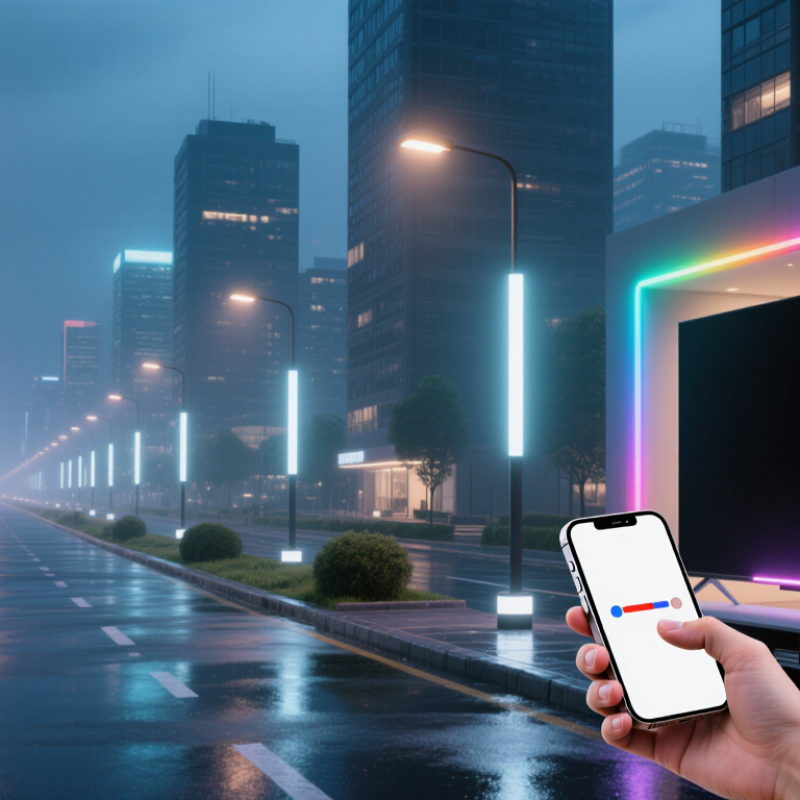
7 Best Smart LED Strip and Street Light Controllers?

What Smart LED Strip and Street Light Controllers Do

Smart LED strip and street light controllers coordinate power, brightness, color, timing, and automation. They act as the control center between lighting fixtures, sensors, and a user interface. For LED strips, a controller can create smooth fades, moving effects, dimming, and separate color zones. Street light controllers usually focus on scheduled switching, daylight response, motion detection, and energy management. Reliable systems also monitor voltage, current, and communication status.

In practical installations, compatibility matters more than a long feature list. The controller must match the strip’s voltage, total wattage, and control method. Outdoor units need weather-resistant enclosures and secure cable connections. A photocell can reduce unnecessary daytime operation, while motion sensors can brighten paths only when people approach. Wireless control is convenient, but wired backup control may remain useful during network failures. I have found that complicated scenes often look impressive during testing but become difficult to maintain later. Simpler settings usually prove more dependable.

Tips: Calculate the total load before installation, then leave extra capacity for heat and future expansion. Test every zone at night. Check sensor angles, delay times, and emergency manual controls. Keep controller firmware updated through approved procedures, but record the previous settings first. Small documentation gaps can create large service problems. Avoid placing communication equipment inside metal boxes without checking signal performance. Test it twice.
Key Features to Compare in LED Light Controllers

Choosing among the 7 best smart LED strip and street light controllers starts with their core features, not their appearance. In field installations, I check protocol compatibility, voltage range, and maximum load before testing colors. A controller should match the light’s power requirements precisely. Undersized hardware may overheat inside a sealed cabinet.

Wireless control is useful, but reliability matters more than novelty. Look for stable Wi-Fi, Bluetooth, or mesh communication, plus a manual control option. Signal strength can weaken near concrete walls and metal poles. App scheduling should support sunrise, sunset, dimming, and seasonal adjustments. Test it at night. A delayed command can create safety and maintenance problems.

For outdoor street lighting, weather resistance, surge protection, and thermal management deserve close attention. A clear IP rating helps, but installation quality still affects performance. Check whether the controller supports zone control, fault alerts, energy monitoring, and firmware updates. For LED strips, smooth dimming and accurate color control prevent flicker and uneven transitions. I also prefer controllers with readable wiring labels and replaceable fuses. They reduce mistakes during repairs.

One overlooked feature is data privacy. Remote platforms should explain how usage data is stored and protected. Compatibility claims can also be vague, so verify them with the exact light type. I once assumed two devices would communicate correctly, but their control signals differed. That error cost extra setup time. Reliable controllers make testing simple, even when the installer is tired.

Seven Leading Controllers for Smart Strips and Street Lights

Seven Leading Controllers for Smart Strips and Street Lights

Choosing the right controller depends on distance, wiring, weather, and required lighting effects. In practical installations, seven controller types stand out for different spaces and control demands. Wi-Fi controllers suit homes, shops, and small outdoor projects with stable internet access. Bluetooth mesh works well across rooms, although nearby walls can weaken signals. Zigbee controllers offer efficient local automation and usually need a compatible hub. Keep it simple.

RF controllers remain useful where users need direct remote control without an internet connection. DMX512 controllers deliver precise color changes for stages, façades, and animated strip lighting. DALI-2 controllers fit professional street-light networks, especially when dimming schedules and fault reporting matter. I have found that compatibility matters more than impressive app features.

LoRaWAN controllers are practical for widely spaced street lights because they support long-range monitoring and low power use. For outdoor poles, check the enclosure rating, surge protection, operating temperature, and load capacity. Confirm the controller matches the strip voltage and supports the required current. A reliable setup should continue basic lighting when the network fails. I still question overly complicated systems. Real sites are rarely perfect, and installers sometimes need clearer wiring diagrams, stronger seals, or easier manual controls.

Installation and Setup Steps for Different Lighting Systems

Smart LED strip and street light controllers need different installation methods. Begin by checking the strip voltage, controller rating, and power supply capacity. Never connect a low-voltage strip directly to household mains. Power off.

For indoor LED strips, measure the route and cut only at marked points. Attach the strip to a clean, dry surface, then connect the controller between the power supply and strip. Match the positive and negative terminals carefully. Pair the controller through its approved app, remote, or wall switch. Set brightness and color limits before mounting the diffuser. Test gently. Loose connectors often cause flickering.

Outdoor systems require more preparation. Choose weather-resistant enclosures, sealed cable glands, and connectors rated for outdoor use. Keep the controller above standing water and leave a small drip loop in each cable. Street light controllers may require a qualified electrician, especially when they connect with mains circuits, timers, photocells, or network cabinets. Confirm local electrical rules before energizing the system. Configure schedules during daylight, then test automatic switching after sunset. I once trusted a waterproof label too quickly; moisture still entered through an unsealed cable joint. That mistake changed my checklist. I now inspect every entry point, record voltage readings, and retest after several hours. A controller can appear successful while hiding a weak connection.

Safety, Compatibility, and Maintenance Considerations

7 Best Smart LED Strip and Street Light Controllers?

Safety, Compatibility, and Maintenance Considerations

A controller is only safe when its electrical limits match the lighting load. Check voltage, total wattage, current, and connector polarity before installation. A 24-volt strip still needs a correctly rated power supply. Add fuses near the supply, especially on long runs. For outdoor street lighting, use weatherproof enclosures and cable glands. IEC 60529 ingress ratings help verify protection against dust and water. Local electrical rules still matter.

Compatibility is less obvious. Analog strips usually need PWM control, while addressable strips require data timing and signal direction. Street-light systems may use 0–10 V, digital lighting protocols, or networked control. Mixing them can cause flicker, random colors, or permanent damage. The U.S. Department of Energy reports that LED lighting can use up to 75% less energy and last up to 25 times longer than incandescent lighting. Poor control design can erase part of that benefit through standby power and inefficient scheduling.

Maintenance needs a written routine, not assumptions. Inspect connectors for heat marks, moisture, and corrosion every few months. Clean photocells and check nighttime activation. Review controller logs after storms or firmware updates. Keep spare fuses and one tested controller available. Small details matter. I have seen systems fail because installers ignored cable voltage drop on long outdoor runs. That mistake is preventable, but compatibility tables are often incomplete. Verify every specification with the controller and lamp manufacturer before approval.

7 Best Smart LED Strip and Street Light Controllers? - Safety, Compatibility, and Maintenance Considerations

Controller Type Best Use Typical Input / Output Control Protocol Environmental Protection Safety Considerations Compatibility Checks Maintenance Needs Relative Suitability
Wi-Fi RGB/RGBW Strip Controller Residential rooms, cabinets, displays, and small decorative installations Usually 5, 12, or 24 V DC; common load range is approximately 3–10 A per channel, depending on the model Wi-Fi, app control, schedules, and sometimes voice-assistant integration Usually indoor-rated; outdoor use requires a suitably protected enclosure Use a correctly rated SELV power supply, provide ventilation, and avoid exceeding the controller's current rating Match strip voltage, RGB/RGBW channel arrangement, connector polarity, current draw, and dimming method Inspect connectors, remove dust, check Wi-Fi connectivity, and retighten low-voltage terminals periodically Excellent for simple indoor strip projects
Zigbee RGB/RGBW or CCT Controller Multi-room lighting where low power consumption and a local mesh network are preferred Commonly 12 or 24 V DC; typically supports several low-voltage PWM channels Zigbee 3.0 or another compatible Zigbee profile; requires a coordinating hub Indoor by default; outdoor installations need an IP-rated enclosure and sealed cable entries Maintain separation from mains wiring and confirm that the hub supports the controller's device profile Verify voltage, PWM channels, hub compatibility, neutral requirements, and maximum current per channel Check mesh coverage, replace damaged terminals, and review firmware or hub updates Very good for scalable indoor systems
Bluetooth Mesh Strip Controller Apartments, retail displays, and installations requiring local phone commissioning Generally 5, 12, or 24 V DC with PWM output for single-color, CCT, RGB, or RGBW strips Bluetooth Low Energy mesh; gateway requirements vary by system Usually indoor-rated unless installed inside a weatherproof enclosure Keep the power supply within its thermal limits and use strain relief on all low-voltage cables Confirm mesh profile, app support, strip voltage, channel count, and gateway or remote-access requirements Test mesh routing, clean enclosure vents, and document reset and pairing procedures Good for local control and moderate-size installations
DMX512 LED Decoder Stage lighting, architectural façades, entertainment venues, and synchronized commercial displays Usually 12 or 24 V DC; commonly provides 3–4 PWM output channels with model-specific current limits DMX512 over RS-485; may support constant-voltage PWM output Indoor and outdoor versions exist; outdoor units should use appropriate IP protection Use correct DMX termination, observe polarity, provide overcurrent protection, and prevent excessive heat buildup Check DMX addressing, cable impedance, channel mode, voltage, PWM frequency, and total strip load Inspect data cables, confirm termination, clean cooling surfaces, and test scenes after maintenance Excellent for professional synchronized lighting
Photocell and Astronomical Timer Street-Light Controller Standalone roadway, parking-lot, pathway, and security lighting Commonly rated for 100–277 V AC or other region-specific mains ranges; output may be relay-switched or dimming-enabled Photocell sensing, time schedules, and sometimes 0–10 V or DALI dimming Outdoor-rated housing is normally required; enclosure rating should be selected for rain, dust, and condensation exposure Mains installation must be completed by qualified personnel with isolation, grounding, surge protection, and correct breaker sizing Check line voltage, receptacle or wiring standard, relay inrush rating, photocell orientation, and luminaire dimming interface Clean the sensor window, inspect seals, verify switching times, and check for corrosion or water ingress Best for simple autonomous street lighting
0–10 V or DALI-2 Street-Light Controller Commercial roads, campuses, car parks, and projects requiring structured dimming and monitoring Mains-powered controller with 0–10 V or DALI-2 control output; exact supply range and relay capacity are model-specific 0–10 V, DALI-2, switching relay, and optional sensor input Use an outdoor-rated enclosure and suitable cable glands; condensation control may be required Confirm electrical isolation, grounding, surge protection, polarity, and minimum dimming level supported by the driver Verify that the LED driver supports the selected protocol, addressing method, control polarity, and required standby behavior Check control-loop wiring, review fault logs, test dimming levels, and inspect surge protection devices Excellent for managed commercial networks
LoRaWAN Outdoor Lighting Node Large outdoor networks where long range, centralized monitoring, and low maintenance are priorities Mains-powered node with switching, 0–10 V, DALI, or digital control; network performance depends on gateway coverage LoRaWAN for communications, with a separate luminaire control interface Designed for outdoor deployment when the enclosure, connector, and antenna assembly meet the required IP rating Use qualified mains installation, surge protection, secure network credentials, and fail-safe local lighting settings Check frequency region, gateway coverage, network server support, luminaire socket or wiring, and dimming protocol Monitor connectivity, inspect antenna seals, update firmware securely, and verify scheduled fallback operation Best for large connected outdoor deployments

Note: Electrical ratings, enclosure protection, communication profiles, and dimming interfaces vary by specific model. Always verify the installation manual and local electrical requirements before purchase or installation.