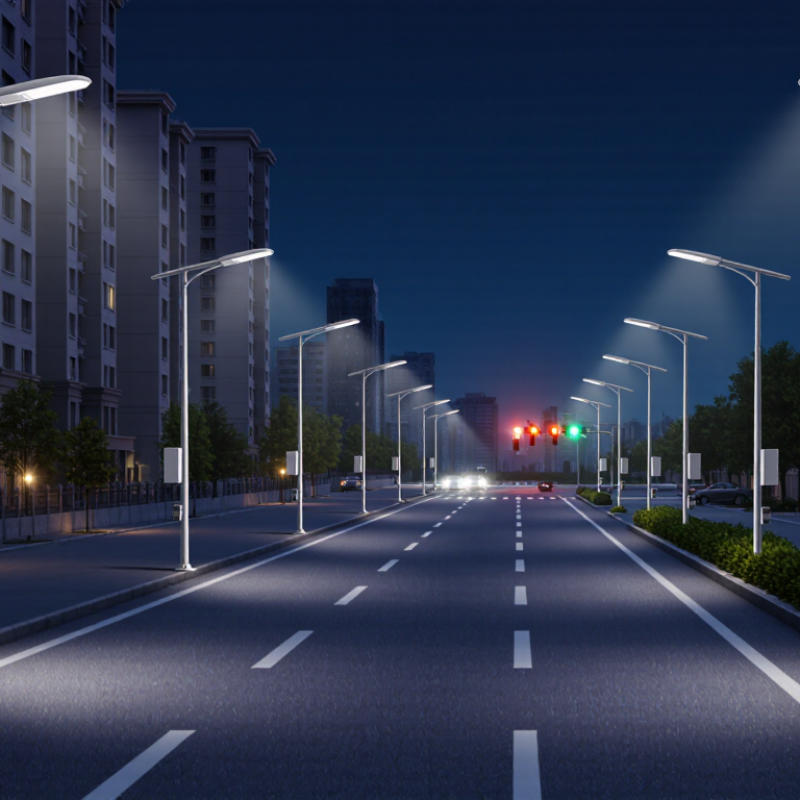
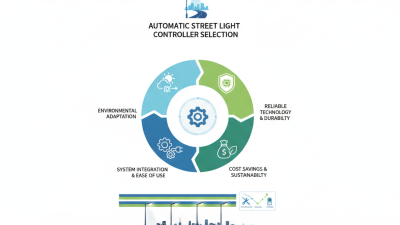
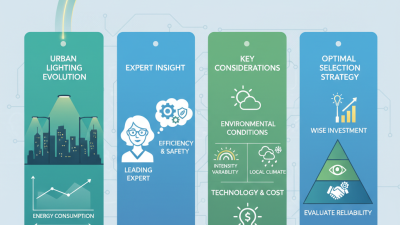
Choosing the best Street Lighting Control system begins with the street itself, not the product brochure. A coastal road faces salt, wind, and damp connectors. An urban avenue faces traffic changes, dense buildings, and uneven wireless coverage. A quiet residential lane needs different dimming logic from a busy intersection.
Lighting researcher Dr. Mariana Figueiro has said, “Light is a powerful biological stimulus.” Her observation matters beyond indoor spaces. Public lighting influences visibility, comfort, sleep patterns, and the nighttime character of a neighborhood. The right control platform should reduce energy use without creating dark spots or sudden brightness changes.
Look for measurable performance. Can the system dim each fixture, report faults, and operate during network loss? Does it support open standards such as DALI-2, Zhaga, or NEMA interfaces? Check the answers in a real pilot, not only in a demonstration room. Record energy consumption, outage response time, wireless stability, and maintenance visits.
Small details matter. A technician should replace a node without rewiring the entire pole. Operators should see a failed luminaire on a map within minutes. Residents should not experience abrupt midnight dimming. That assumption deserves doubt.
A reliable Street Lighting Control solution also needs strong access management, encrypted communications, clear data ownership, and practical training. These safeguards support responsible operation and long-term trust. The cheapest system may become expensive when licenses, proprietary parts, or repeated truck visits appear later.
There is no universal winner. The best choice fits local weather, pole infrastructure, traffic patterns, budgets, and community expectations. Measure twice. Pilot carefully. Then decide.
Define the project goals before comparing control systems. A city may want lower energy use, safer crossings, or fewer night inspections. These goals should be measurable. Record current energy bills, failure rates, lighting levels, and maintenance hours. Measure the baseline. A site survey should include road width, pole spacing, tree cover, and nearby homes. These details affect dimming schedules and sensor performance.
Ask who will operate the system each day. Maintenance teams may need fault alerts, remote switching, and clear access permissions. Engineers should confirm compatibility with existing fixtures and electrical cabinets. The specification should include operating temperatures, network coverage, response times, data ownership, and cybersecurity controls. It should also define acceptable lighting levels for roads, crossings, parks, and pedestrian areas. Keep it practical. A feature is not useful if field staff cannot understand it during a rainy midnight repair.
Set a realistic budget that includes installation, training, communications, and future replacements. Request evidence from comparable streets, not only presentation claims. A small pilot can test dimming accuracy, signal reliability, and public response. Review the results after several weeks. Early assumptions may prove wrong, especially near tall buildings or dense trees. Plans can change. Document those changes, and let operators challenge the original requirements before full deployment.
Choosing a street lighting control system starts with technology, not a glossy feature list. Photocells provide simple dusk-to-dawn operation and remain reliable on quiet roads. Astronomical clocks follow seasonal schedules, but they need accurate location and time settings. Networked controls add dimming, fault alerts, and remote programming. The U.S. Department of Energy reports that connected lighting controls can deliver meaningful additional savings beyond efficient luminaires, although results vary by site and operating practice.
Communication networks determine whether those features work consistently. RF mesh suits dense streets where poles can relay signals between nearby units. Cellular networks offer wider coverage, but recurring fees and weak underground signals require attention. Low-power wide-area networks can reduce energy use and support long battery life, yet buildings and trees may create blind spots. A 2023 report from the International Energy Agency notes that lighting still represents about 15% of global electricity use, making control performance more than a technical detail.
System features should match field conditions. Check dimming compatibility, cabinet integration, cybersecurity controls, open protocols, outage alerts, and exportable data. During a pilot, inspect a real junction box after rain, not only a dashboard in an office. Measure response time, energy consumption, false alarms, and maintenance hours. The Global Covenant of Mayors and related city lighting studies show that savings depend heavily on commissioning and local operating schedules. I would not promise one universal percentage. A poorly configured system can waste savings. Sometimes, a simpler control system performs better.
Choosing a street lighting control system requires more than comparing dimming claims. On a pilot road, measure wattage, light levels, faults, and maintenance visits for several weeks. A system dimming to 30% after midnight can save energy, if local activity supports it. Request measured results, not estimates.
Automation should respond to traffic, weather, and local schedules without creating confusing manual work. Look for adaptive dimming, remote fault alerts, and gradual start-up controls. Test it at night. Check what happens when a cabinet loses communication. Does lighting follow a safe fallback schedule? Operators need clear dashboards and useful alerts.
Smart city compatibility depends on open communication standards, secure access, and usable data. Confirm whether controllers can share status with traffic, emergency, and asset-management platforms. Ask about updates, data ownership, and long-term support. In my experience, integration often takes longer than expected. A technically impressive system may frustrate crews when training is weak. Sensors can misread fog, empty streets, or unusual events. Human checks still matter. A careful balance between energy savings and dependable public service is essential.
Choosing a street lighting control system begins with installation cost, not the purchase price. The U.S. Department of Energy reports that LED conversion can reduce lighting energy use substantially, but control equipment adds sensors, gateways, wiring, and commissioning time. A low bid can mislead. Trenching, traffic management, and cabinet upgrades may dominate the invoice.
Maintenance is less visible. IEA reports that lighting represents about 15% of global electricity consumption, so small control errors can create large operating losses. Ask how often sensors need calibration, how software updates are managed, and whether faults remain visible during network outages. A system with fewer field components may be easier to repair. Yet simple systems can provide weaker scheduling and limited diagnostics. That trade-off deserves honest review.
Tips: Request a five-year cost model. Include energy, cellular fees, inspections, spare parts, and technician travel. Test dimming at a busy junction and a quiet residential road. Measure response time. Pilot results can disappoint, but that is useful evidence. Design for expansion, too. Leave capacity for new districts, adaptive dimming, and open data interfaces. The International Energy Agency emphasizes efficiency improvements, but real savings depend on operating schedules and local conditions. Do not promise savings before measuring baseline electricity use. Crew feedback matters. A technically elegant system may still fail when maintenance staff find it confusing.
Comparative benchmark of installation cost, annual maintenance needs, and scalability for typical municipal street-lighting projects.
Estimated costs are shown per controlled light point in USD. Basic astronomical timers generally have the lowest upfront cost but provide limited scalability. Wireless networked controls require a higher initial investment, while remote monitoring, fault alerts, dimming schedules, and flexible expansion can reduce maintenance effort as the network grows. Actual costs vary by pole layout, labor rates, communications coverage, and control requirements.
A reliable street lighting control supplier should provide more than attractive energy forecasts. Ask for documented field experience, independent safety certifications, clear service agreements, and references from comparable cities. Examine how the system handles network failure, manual overrides, data ownership, and software updates. Local technical support matters when a controller stops communicating during heavy rain. Response time must be written into the contract.
Implementation should begin with an accurate asset survey. Record each pole’s location, lamp type, power rating, and circuit connection. A small pilot area can reveal practical problems before wider deployment. Test scheduled dimming, motion responses, outage alerts, and emergency overrides during different traffic conditions. Include maintenance workers in the trials. Their daily observations often expose issues that dashboards miss. One pilot I reviewed found several incorrect pole coordinates. The map looked complete, but it was not.
Testing should continue after installation. Compare measured energy use with baseline readings, not supplier estimates alone. Check light levels at road edges, crossings, and pedestrian paths. Confirm that commands reach controllers within the required time. Keep a change log for every configuration adjustment. Monitoring should track outages, communication gaps, power consumption, and repeated faults. Set practical alert thresholds, because too many warnings can hide serious failures. Review performance monthly, then revise dimming plans when weather, traffic, or community feedback changes. Some plans will need correction. That is normal, and ignoring it is costly.
| Evaluation Dimension | Recommended Requirement or Planning Data | How to Verify the Supplier or System | Implementation and Testing Activity | Monitoring Indicator | Reference or Evidence |
|---|---|---|---|---|---|
| Lighting compliance | The control strategy should support the required road-lighting classes, dimming schedules, and maintained illumination levels defined by the project authority. | Request photometric calculations, control profiles, and documented compliance with the applicable road-lighting standard. | Confirm the lighting class for each road type; measure illuminance or luminance at representative points after commissioning. | Percentage of measured points meeting the specified lighting limits; number of non-compliant locations. | Applicable national road-lighting regulations; EN 13201 series where adopted. |
| Dimming and scheduling | Provide calendar-based schedules, astronomical-clock functions, sunrise and sunset adjustment, seasonal changes, and manual override capability. | Review sample schedules and verify that time-zone, daylight-saving, and geographic settings can be configured without changing hardware. | Test normal switching, planned dimming levels, temporary overrides, power recovery, and loss of communication. | Schedule execution accuracy; percentage of lamps operating at the intended dimming level; override duration. | Approved operating schedule; commissioning test records. |
| Interoperability | The system should use documented interfaces and support the required luminaire control, sensor, gateway, and management-system functions. | Request interface specifications, data models, API documentation, and a list of supported control components. | Perform a laboratory compatibility test and a field pilot with the actual luminaire, control node, gateway, and software configuration. | Successful command rate; device discovery rate; percentage of assets reporting correctly to the management platform. | Applicable control-interface specifications, including IEC 62386 or ANSI C136.41 where relevant. |
| Reliability and environmental protection | Outdoor equipment should be rated for the local temperature, humidity, vibration, corrosion, surge, and water or dust exposure conditions. | Check enclosure ratings, operating-temperature limits, surge-protection data, salt or corrosion test evidence, and warranty conditions. | Inspect installation quality; conduct power-cycle, surge-protection, enclosure, and communications-recovery tests according to the project test plan. | Unplanned outage rate; device reboot rate; communication recovery time; water-ingress or environmental fault count. | IEC 60598-1 and the applicable enclosure, electrical-safety, and EMC requirements. |
| Cybersecurity and access control | Use unique user accounts, role-based access, encrypted communications, secure credential management, audit logs, backup procedures, and timely security updates. | Review the supplier’s security policy, vulnerability-response process, software-update method, data-retention policy, and penetration-test summary. | Test password policy, account removal, access levels, audit logging, backup restoration, and operation during network interruption. | Critical vulnerabilities overdue; failed login events; backup success rate; time to revoke user access. | IEC 62443 principles, ISO/IEC 27001-aligned controls, and the project cybersecurity policy. |
| Network coverage and resilience | Define the required coverage, latency, bandwidth, power-loss behavior, local fallback operation, and recovery procedure before selecting the communication method. | Request coverage maps, network architecture, service-level terms, data-usage assumptions, and documented offline behavior. | Survey signal quality; test commands at edge locations; disconnect communications and confirm safe local operation and automatic resynchronization. | Network availability; command latency; percentage of nodes online; average resynchronization time. | Network survey results; system logs; approved service-level agreement. |
| Supplier capability | The supplier should demonstrate relevant outdoor-control experience, documented quality procedures, trained installation personnel, technical support, and a defined escalation process. | Evaluate anonymized project references, audited quality records, support response commitments, training plans, spare-parts policy, and financial continuity information. | Include supplier responsibilities, acceptance criteria, training deliverables, defect-correction periods, and handover documents in the contract. | First-response time; mean time to resolution; open defect age; training completion rate. | Tender evaluation records; support-level agreement; quality-management documentation. |
| Asset data and documentation | Maintain a unique identifier, geographic location, luminaire type, rated power, control-node details, installation date, circuit information, and maintenance history for every asset. | Request sample export files and confirm that data can be exported in a documented, machine-readable format without vendor lock-in. | Compare the asset register with field inventory; verify coordinates, labels, photographs, wiring records, and as-built drawings. | Asset-record completeness; location accuracy; duplicate or unmatched asset count; export success rate. | Approved asset schema; geographic information system records; as-built documentation. |
| Energy measurement and savings | Use measured electrical data where possible and compare consumption against a documented baseline adjusted for operating hours, dimming, outages, and seasonal conditions. | Confirm meter accuracy, sampling interval, data-retention period, and calculation method; do not rely only on estimated savings. | Record baseline consumption before deployment and compare it with post-installation data over equivalent operating periods. | Kilowatt-hours per operating hour; energy reduction percentage; peak demand; estimated carbon reduction. | Utility bills, calibrated meters, interval data, and approved measurement-and-verification method. |
| Installation and commissioning | Use a phased deployment: survey, pilot, installation, configuration, functional testing, user training, acceptance, and operational handover. | Assess the supplier’s method statement, risk assessment, traffic-management plan, installation checklist, and commissioning template. | Start with a representative pilot area; correct design or configuration issues before full deployment; record all test results. | First-pass acceptance rate; installation defects per 100 assets; percentage of assets commissioned on schedule. | Approved method statement; inspection and test plan; commissioning certificates. |
| Fault detection and maintenance | The management platform should identify lamp, driver, power, controller, sensor, communication, and schedule faults with timestamps and severity levels. | Review alarm definitions, notification rules, maintenance workflows, ticket integration, and historical fault reporting. | Create simulated faults and verify alarm generation, notification, acknowledgement, dispatch, repair, and closure. | Fault-detection rate; false-alarm rate; mean time to acknowledge; mean time to repair; repeat-fault rate. | Alarm logs; maintenance tickets; field-service records; monthly performance reports. |
| Monitoring and governance | Define monthly and quarterly reviews covering availability, lighting compliance, energy, faults, cybersecurity, service performance, and unresolved risks. | Require dashboard examples, downloadable reports, data ownership terms, retention periods, and an exit plan for system replacement. | Assign owners for data quality, alarms, security, maintenance, and contract management; approve a recurring reporting calendar. | System availability; compliance rate; energy trend; unresolved critical alarms; service-level compliance. | Operational dashboard; governance minutes; monthly and quarterly KPI reports. |
| Total cost of ownership | Evaluate equipment, installation, communications, software, licenses, training, maintenance, energy, cybersecurity, replacement, and decommissioning costs over the planned service period. | Request a transparent cost model with assumptions, recurring charges, price-adjustment rules, warranty coverage, and end-of-contract data-export costs. | Use the pilot to validate installation hours, communications costs, fault rates, and actual energy performance before approving full deployment. | Annual operating cost per asset; lifecycle cost; payback period; budget variance; recurring cost per connected device. | Approved business case; contract pricing schedule; measured energy and maintenance data. |