How to Choose the Right Nema Street Light Controller for Your Needs?
Choosing the right Nema Street Light Controller can significantly impact your lighting infrastructure. These controllers manage the operation of street lights efficiently, optimizing energy usage and enhancing public safety. However, with various models available, making an informed decision is crucial.
Understanding your specific requirements is vital. Consider factors like light intensity, energy consumption, and control features. Each project has unique needs, and not all Nema Street Light Controllers are created equal. You may find that a controller with advanced features exceeds your current needs but is also more costly. Reflecting on your priorities can help in this decision-making process.
Consulting with experts in the field can provide valuable insights. They can help clarify the benefits of different controllers, ensuring you select one that aligns with your vision. Reliability and integration with existing systems are key elements that deserve careful consideration. Identifying potential challenges early on can save time and resources later.

Understanding Nema Street Light Controllers and Their Functionality
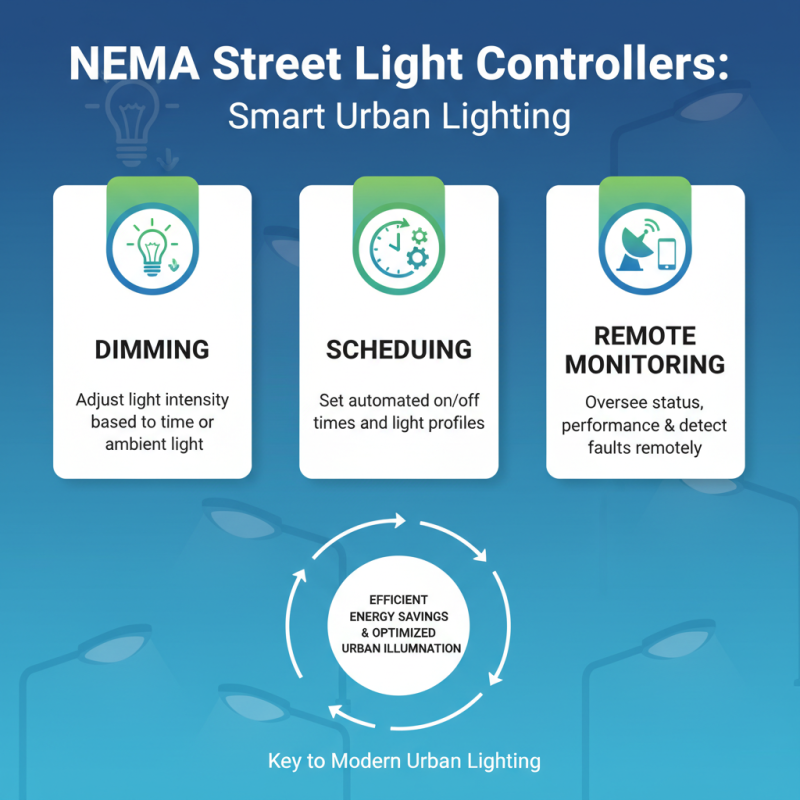
Nema street light controllers play a crucial role in urban lighting systems. They enable various functionalities, such as dimming, scheduling, and remote monitoring. Understanding these features is essential for making an informed decision.
These controllers connect with NEMA compliant street lights and facilitate energy management. They enhance safety by allowing real-time adjustments. For instance, cities can dim lights during low-traffic hours. This leads to cost savings and reduced energy consumption. However, not all systems are equal. Some may lack essential features or have compatibility issues.
Selecting the right controller requires assessing specific needs. Evaluate the size of your lighting network. Consider whether you require integration with existing systems. Reflect on user-friendliness as well, since a complex interface can hinder usability. An informed choice will ensure effective street lighting management while addressing both technological and operational challenges.
Key Features to Consider When Selecting a Nema Street Light Controller
When selecting a Nema street light controller, focus on several key features. The controller must support the specific technology requirements of your street lighting system. Look for compatibility with LED fixtures, as they dominate the market. According to a recent report, over 70% of streetlights are now LED-based, stressing the importance of compatibility.
Consider energy efficiency as a significant factor. A good Nema controller should enable dimming capabilities. Studies show that dimmable street lights can reduce energy use by up to 50%. This not only cuts costs but also lowers carbon emissions. Ideally, the controller should offer remote monitoring and control features. This can enhance responsiveness to local conditions. Some reports indicate that municipalities save up to 30% on maintenance costs with smart controllers.
Another essential feature is data collection capability. Controllers that gather data on energy usage and performance help municipalities make informed decisions. However, not all controllers provide the same level of data granularity. It’s crucial to assess the value of the data you will receive. The right balance between technology, cost, and functionality is often overlooked. A reflective approach can ensure you make the best choice for your street lighting needs.
Key Features Comparison of NEMA Street Light Controllers
Assessing Power and Voltage Requirements for Your Lighting System
When selecting a Nema street light controller, it's essential to assess power and voltage requirements. Start by evaluating the total wattage of your lighting system. This ensures the controller can handle the load without overheating. It’s equally important to consider the compatibility of the controller with various light types, such as LED or HID. Mismatched systems may lead to inefficiencies.
Tips: Determine the voltage range your lights operate within. A controller that doesn’t match can cause flickering or even failure. Using a controller with adjustable voltage can offer flexibility for future upgrades.
Also, consider the environment where the lights will be installed. Harsh weather conditions require controllers with robust protection. Check for features like surge protection and waterproof housing. Poor choices here may result in regular future replacements, which is costly and frustrating.
Lastly, reflect on your long-term needs. An underestimated power requirement may impact performance. Ensure your controller can adapt to any potential changes in your lighting setup. Planning for scalability can save money and time later on.
Evaluating Compatibility with Different Street Light Models and Brands
When selecting a Nema street light controller, compatibility with various street light models and brands is crucial. Different manufacturers often use distinct wiring and control systems. Understanding these variations can prevent operational issues. For example, some brands may require specific software integrations for full functionality. Ensure your controller can adapt to your specific light fixtures.
Prioritize compatibility assessments early in the selection process. Check technical specifications of both the controller and the lights. Misalignment may lead to inefficient energy use or erratic performance. Sometimes, an incompatible controller can cause flickering or delayed responses. Collecting feedback from existing users can inform your choices.
Don’t underestimate the importance of future upgrades and scalability. Your needs might change as technology evolves. A controller that works well today may not support newer options tomorrow. Keeping an open mind to expansion can save costs in the long run. Evaluate if the system allows for easy updates or additional features. Compatibility is not just about the present but also about future-proofing your lighting solutions.
Exploring Budget Considerations for Nema Street Light Controllers
When selecting a Nema street light controller, budget is a significant factor. Many municipalities operate under strict financial constraints. Understanding the cost implications can help make a decision that aligns with budgetary needs. A robust controller can seem expensive, but it could reduce long-term maintenance costs.
Installation costs can also vary widely. Cheaper controllers might save initial money, but they often lead to higher operational costs. Reliability is paramount in street lighting. A less reliable unit could cause more frequent repairs and replacements. It's essential to think about total lifecycle costs.
Considering functionality is equally important. Some controllers offer advanced features like dimming and motion sensing. These features might seem costly at first glance. However, they can lead to significant energy savings and extended bulb life. Balancing initial investment with operational efficiency often requires careful analysis and reflection. While a low upfront cost sounds appealing, long-term benefits should also be a priority.
How to Choose the Right Nema Street Light Controller for Your Needs? - Exploring Budget Considerations for Nema Street Light Controllers
| Feature |
Description |
Price Range (USD) |
Recommended Use |
| Basic Functionality |
Standard on/off control for street lights. |
$50 - $100 |
Ideal for residential areas. |
| Dimming Capability |
Allows for light intensity adjustment based on time or ambient light. |
$100 - $200 |
Suitable for urban areas with varying traffic levels. |
| Smart Features |
Integration with IoT for remote management and monitoring. |
$200 - $400 |
Best for smart city projects. |
| Power Supply Compatibility |
Can work with various voltage levels and types. |
$50 - $150 |
Useful for different street light systems. |
| Durability Rating |
Weather-resistant and designed for long-term outdoor use. |
$100 - $250 |
Recommended for harsh environmental conditions. |